
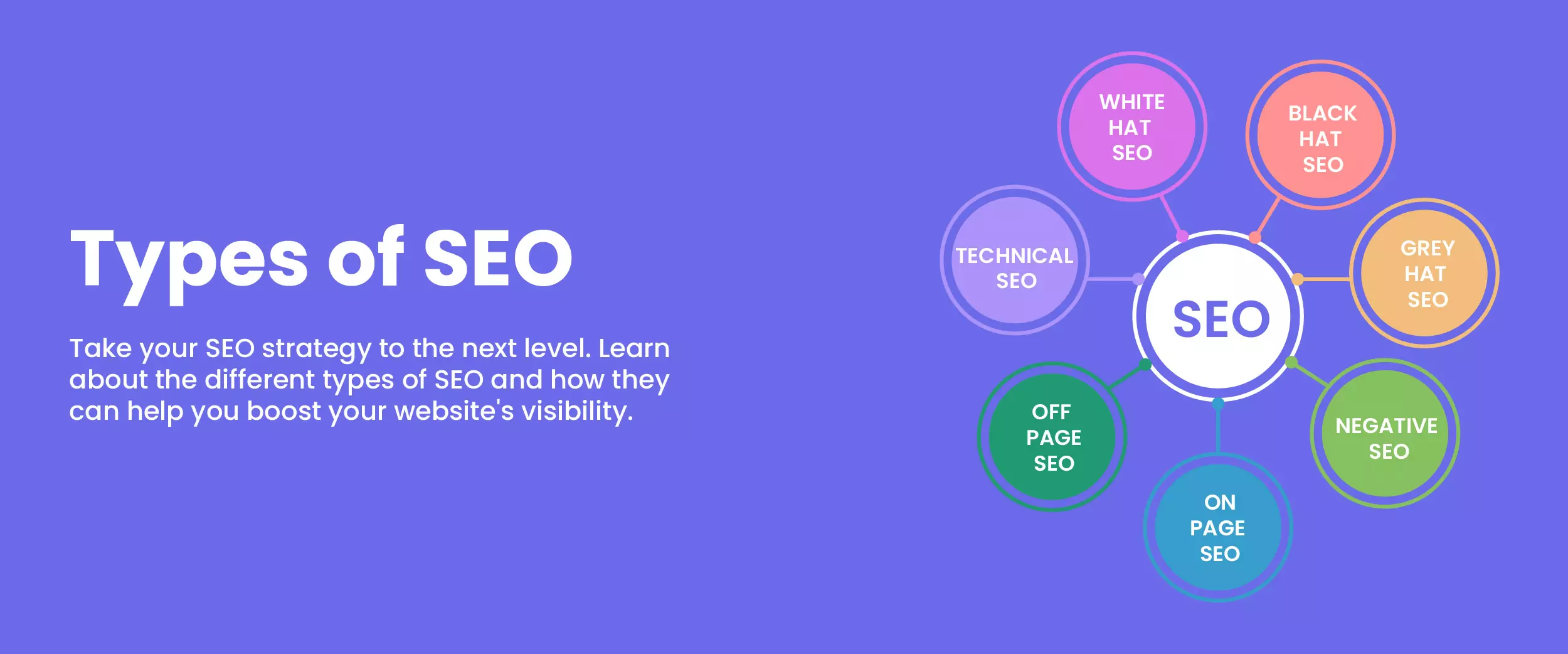
Types of SEO
Search Engine Optimization (SEO) is essential for increasing your website’s visibility in search engines like Google. But SEO isn’t a one-size-fits-all strategy—it includes different types, each targeting a specific aspect of your website and digital presence.
Here’s a breakdown of the main types of SEO every business should know:
1. On-Page SEO
On-page SEO focuses on optimizing the content and structure within your website to make it more search engine-friendly.
Key elements include:
- Keyword research and placement
- Meta titles and descriptions
- Header tags (H1, H2, H3)
- Internal linking
- Image optimization (alt text, file names)
- URL structure
- High-quality, relevant content
This type of SEO helps search engines understand what your pages are about and improves user experience.
2. Off-Page SEO
Off-page SEO involves actions taken outside your website to improve its authority, reputation, and ranking.
Common off-page strategies:
- Backlink building (from high-authority websites)
- Guest blogging
- Social media sharing
- Influencer outreach
- Brand mentions
The goal is to build trust and credibility in the eyes of search engines by showing that other reputable sites vouch for your content.
3. Technical SEO
Technical SEO focuses on improving the backend structure of your website to help search engines crawl and index your site efficiently.
Important technical aspects include:
- Website speed and performance
- Mobile responsiveness
- Secure connections (HTTPS)
- XML sitemaps
- Robots.txt file
- Fixing crawl errors
- Canonical tags to avoid duplicate content
Strong technical SEO ensures your site is easy for search engines (and users) to navigate.
4. Local SEO
Local SEO helps your business appear in local search results, especially useful for brick-and-mortar businesses.
Key components:
- Google Business Profile optimization
- Local keyword targeting
- NAP consistency (Name, Address, Phone) across directories
- Online reviews and ratings
- Local citations (business listings on sites like Yelp, Yellow Pages, etc.)
It’s all about making sure people in your area can find and contact you easily.
5. E-commerce SEO
This type of SEO is tailored specifically for online stores to improve product visibility and drive sales.
Key areas include:
- Optimizing product titles and descriptions
- Schema markup for product pages
- Category and filter navigation
- User-generated content like reviews
- Image alt tags for product photos
- SEO-friendly URLs for products and categories
E-commerce SEO helps drive organic traffic that converts into paying customers.
6. Mobile SEO
Mobile SEO focuses on ensuring your site provides a smooth, fast, and user-friendly experience on smartphones and tablets.
Includes:
- Mobile-friendly design (responsive layout)
- Fast page load speed
- Touch-friendly navigation
- Optimized content layout for small screens
With mobile traffic dominating, this is now a must-have, not a nice-to-have.
Final Thoughts
Understanding the different types of SEO helps you build a more complete and effective strategy. From optimizing your website content to strengthening your local presence and improving technical performance—each type plays a vital role in helping your business grow online.